
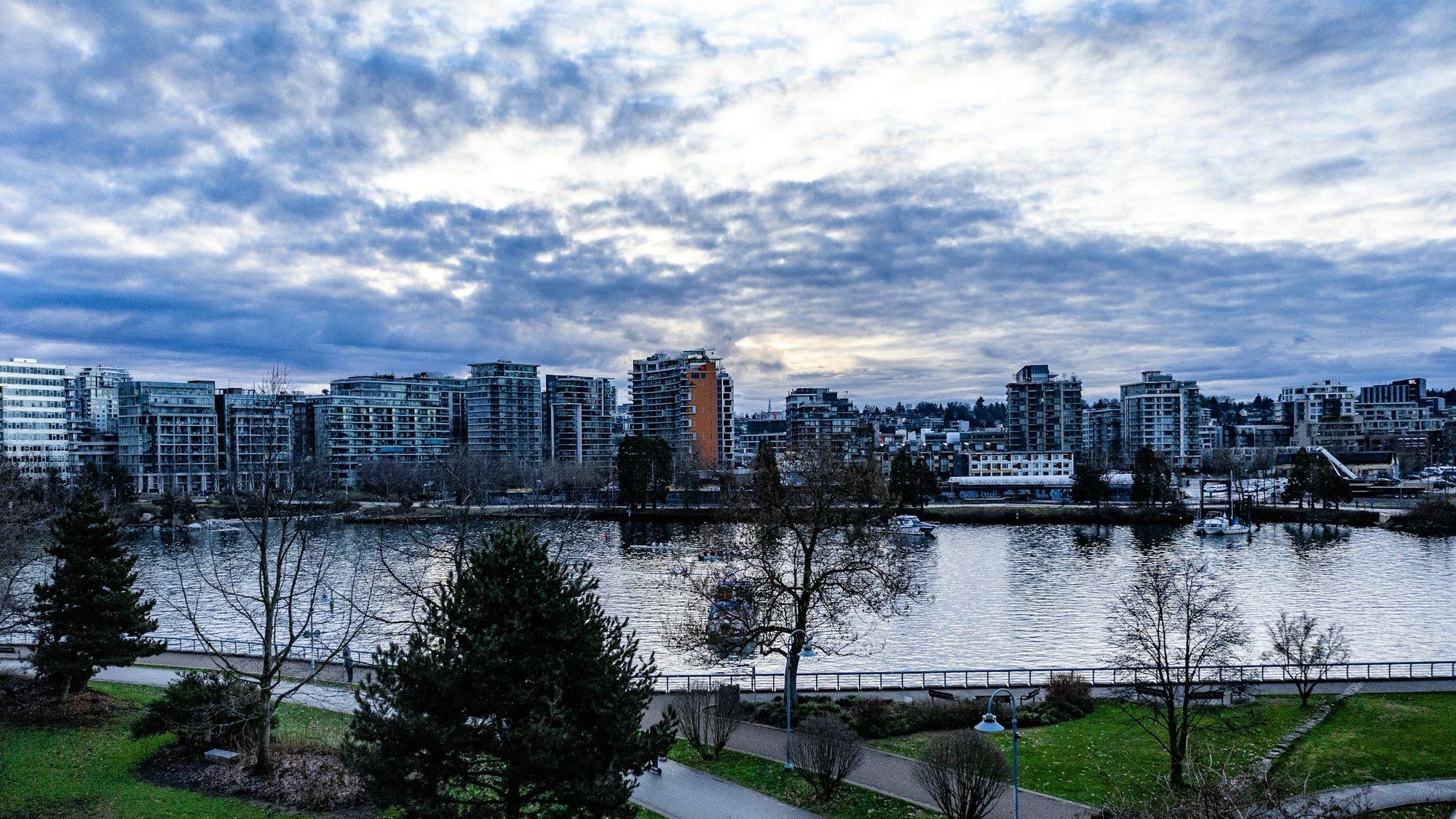
Olympic Village was built in a hurry for the 2010 Winter Games and then sold slowly through the years that followed. The result, fifteen years on, is one of the most consistent condo neighbourhoods in Vancouver: a few square blocks of concrete mid-rises around a plaza, a community centre and a seawall, with the Canada Line at one end and Science World at the other. The buildings are more alike than in any other part of the city, which cuts both ways: easy to compare, easy to overpay for the wrong one.
What the buildings are like
Construction. The original village buildings (the development was marketed as Millennium Water) are concrete, six to twelve storeys, built to high environmental standards for their time, with modern rainscreened envelopes. Later phases around Hinge Park and east toward Main Street added more mid-rises, some wood-frame low-rises and townhouse units at grade. The neighbourhood also includes City-owned non-market and co-op housing, which is part of why it feels lived-in rather than investor-owned.
Age. This is the first thing I think about now. The 2010 buildings are past their original new-home warranties and are reaching the point where depreciation reports start scheduling the first major items: parkade membranes, roofing membranes, mechanical equipment, elevator modernization. A good strata has been building its contingency reserve for this; a weaker one is about to discover a levy. The depreciation report, the minutes and the reserve balance, read together, tell you which kind of building you are looking at.
Strata fees. Concrete buildings with amenities, elevators and underground parking cost more to run than wood-frame walk-ups, and fees here reflect that. Compare fees per square foot against the amenities and the reserve contribution, not against a 1975 building in Kitsilano.
The Neighbourhood Energy Utility (NEU). Olympic Village buildings get heat and hot water from the City's district energy system, which recovers heat from the sewer system and from the False Creek Energy Centre. Owners pay for that energy through a separate, metered NEU bill or through the strata, depending on the building, rather than through BC Hydro or FortisBC for heating. It is reliable and low-carbon; it is also a line item that buyers from other neighbourhoods do not expect. Ask how the building bills it and what a typical unit pays.
Insurance. As elsewhere in Vancouver, strata insurance deductibles for water damage can be high. Confirm the deductible and make sure your own policy covers your share.
What is changing around it
- The east end keeps filling in. Remaining parcels toward Main Street and Quebec Street continue to complete, adding newer units that compete with the 2010 stock on finishes while lacking its seawall-front positions.
- False Creek Flats and the new St. Paul's Hospital sit directly east, bringing a large daytime population and more services along Main Street.
- Mount Pleasant's Broadway Plan area begins a few blocks south, which over time adds rental towers and changes the skyline to the south.
How units compete with each other
Because the buildings are similar, the differences that move price are specific:
- Water and skyline views. A False Creek or downtown view adds real money; a courtyard view in the same building does not.
- Floor level and noise. Units over the plaza, Athletes Way and the Salt Building hear events and patio life. Some buyers want that; some do not.
- Layout honesty. A "two bedroom" with an interior second bedroom and a "one bedroom plus den" are not the same product, whatever the listing says.
- Parking and storage. Confirm the stall and locker designation on the Form B; not every unit here has a stall.
- Outdoor space. Terraces on the lower floors and the podium units are a separate market.
If you are selling in Olympic Village
- The pricing review is unusually precise here because the comparables are so close: the same floor plan, the same building, the last six to twelve months. Pricing above that evidence shows immediately.
- Buyers will compare the reserve fund and depreciation report across the village's buildings. If yours is well funded, that is a selling point I will put in writing.
- Photograph the view and the light first; the finishes are similar everywhere.
If you are buying in Olympic Village
- Read the depreciation report's next ten years before you fall for the unit.
- Ask for NEU billing history and the insurance summary alongside the standard strata package.
- A special levy that funds scheduled first-cycle work is normal in a building this age. A strata that has deferred the work is the one to worry about.
- Budget closing costs and keep a reserve after completion. Concrete buildings have fewer surprises than old walk-ups, not none.