
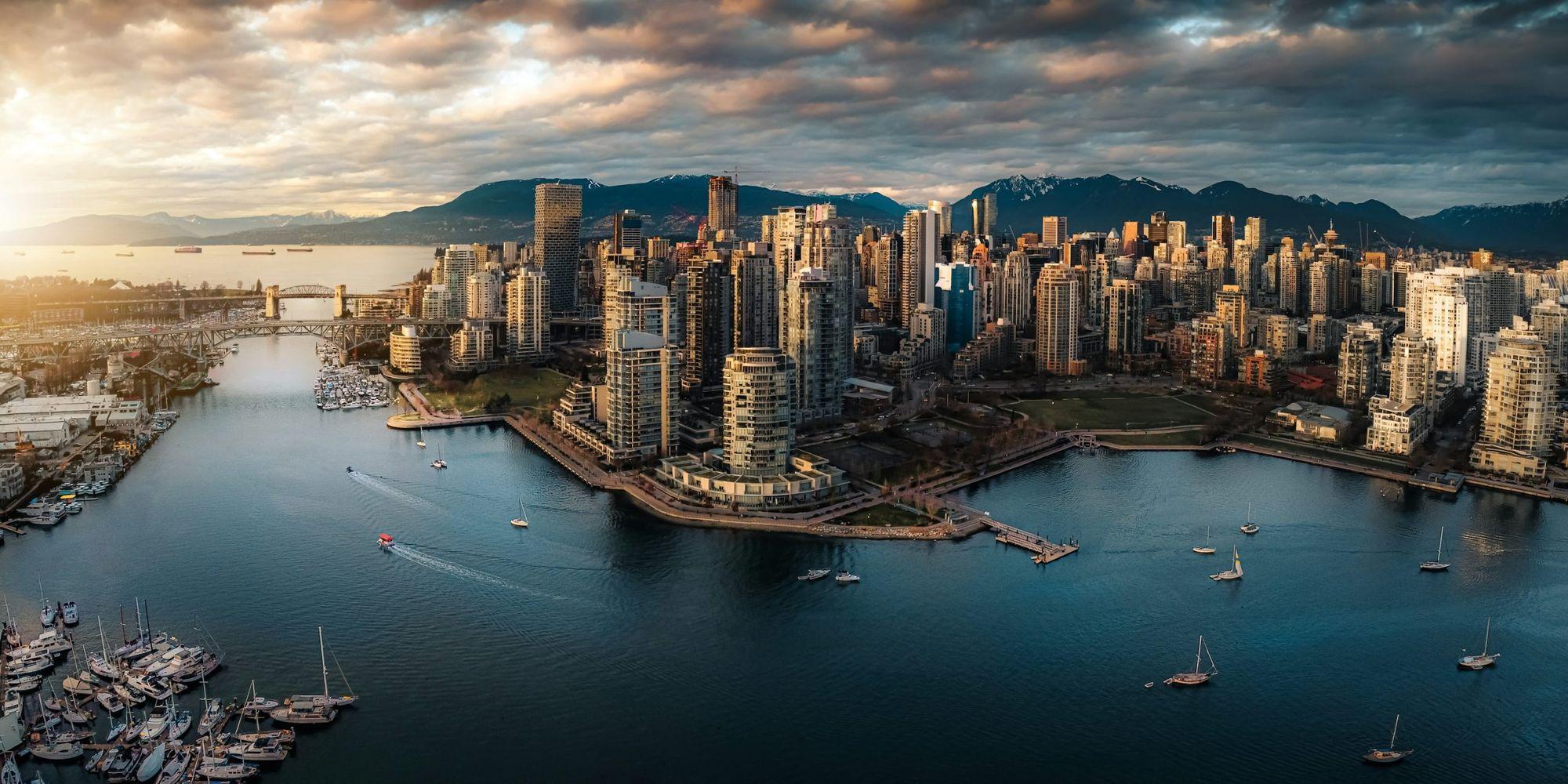
Yaletown started as Canadian Pacific rail yards and warehouses, sat half-empty for decades, and was rebuilt from the Expo 86 lands outward into the glass-tower waterfront most people picture today. That history is still the best way to understand the housing: a small heritage core of brick warehouses on Hamilton and Mainland streets, and around it the towers, parks and seawall of a master-planned neighbourhood built mostly from the mid-1990s on. It is dense, walkable and expensive to run, and the buildings are now old enough that the differences between a well-managed strata and a neglected one show up in dollars.
What the buildings are like
The seawall towers. Most of Yaletown's homes are in concrete high-rises along Pacific Boulevard, Marinaside Crescent and Beach Crescent, built in waves from the mid-1990s through the 2000s, with townhouses tucked into the podiums at street level. They were the first generation of Vancouver's glass "window-wall" towers. That matters now: window-wall systems, sealants, roofing and parkade membranes have finite lives, and many of these buildings have either done a major envelope or window project or are planning one. The depreciation report and the last three years of minutes tell you which.
The heritage lofts. Around Hamilton and Mainland the old warehouses were converted to lofts and offices, with the loading docks turned into patios. The units are a different product: high ceilings, brick and timber, fewer of them, and strata corporations that are small and sometimes mixed with commercial space. Heritage buildings have their own maintenance realities (seismic, roofing, old services), and a small strata has fewer owners to share a big bill.
Amenities and fees. Many Yaletown towers have pools, gyms, concierge and large common areas. They are part of the appeal and part of the monthly cost. When comparing strata fees, look at what the fee buys and how much of it goes into the contingency reserve, rather than comparing the raw number against a simpler building in Mount Pleasant.
Rentals and short-term rentals are two different questions. Since November 2022 the Province no longer allows strata bylaws that restrict ordinary rentals, so any Yaletown owner can rent to a long-term tenant whatever an older bylaw says; the only remaining restriction of that kind is a 55-and-over age bylaw. Short-term accommodation is different: the City licenses short-term rentals only in an operator's principal residence, and stratas are still allowed to prohibit them outright. A lot of Yaletown units are investor-owned, so the owner-to-tenant mix varies building to building. If you are buying to live in, a building with a mostly resident owner base feels different; if you are counting on short-term rental income, check the bylaws and the City rules before the offer, not after.
Insurance. Strata insurance deductibles for water damage are high across downtown. Confirm the deductible and the building's claims history, and make sure your own policy covers your share.
What is around it
- The Roundhouse at Davie and Pacific, the old CPR roundhouse turned community centre, with Engine 374 that pulled the first passenger train into Vancouver.
- David Lam Park and George Wainborn Park on the water, and the seawall running east to Science World and west under the Granville Bridge.
- Yaletown–Roundhouse station on the Canada Line for the airport and Richmond; Aquabus and False Creek ferries to Granville Island and Olympic Village.
- Elsie Roy Elementary on the waterfront, the first new elementary school in an inner-city Vancouver neighbourhood in decades; downtown school capacity is still tight, which families should check before assuming a catchment place.
- BC Place and Rogers Arena a few blocks east: convenient for events, and the source of game-night and concert traffic.
How units compete with each other
- Water versus courtyard. A False Creek or marina view adds real money. An inner-courtyard or tower-to-tower view in the same building does not, however good the finishes.
- Noise. Hamilton and Mainland have restaurants and bars; Pacific Boulevard has traffic and the Granville Bridge ramps; the seawall side hosts the summer fireworks crowds. Visit at 11 pm on a Friday before you decide.
- Floor level and exposure. West and south exposures get afternoon sun and heat; many of these towers have no air conditioning.
- Parking and storage. Confirm the stall and locker on the Form B. Visitor parking rules matter here.
- Age of the last major project. Two similar units in two similar towers can be separated by a six-figure levy that one strata has already paid for and the other has not.
If you are selling in Yaletown
- Your competition is often in your own building. A pricing review here is built on same-building and same-floor-plan sales first, then the neighbouring towers.
- If the strata has completed its envelope, window or elevator work and the reserve is healthy, that is a selling point I will put in writing. Buyers' agents will ask.
- Photograph the view, the outdoor space and the light. Finishes are similar across much of this stock, and renovated kitchens help less than people hope.
If you are buying in Yaletown
- Read the depreciation report's next ten years and the engineer's envelope notes before you fall for the view.
- Ask for the minutes, the insurance summary and the bylaws, and look for the words "window", "membrane", "elevator" and "levy".
- A funded special levy for scheduled work is normal in a building this age; deferred work with a thin reserve is the problem.
- Budget closing costs and keep a reserve after completion.